Saturday, December 13, 2025

The New Civic Path


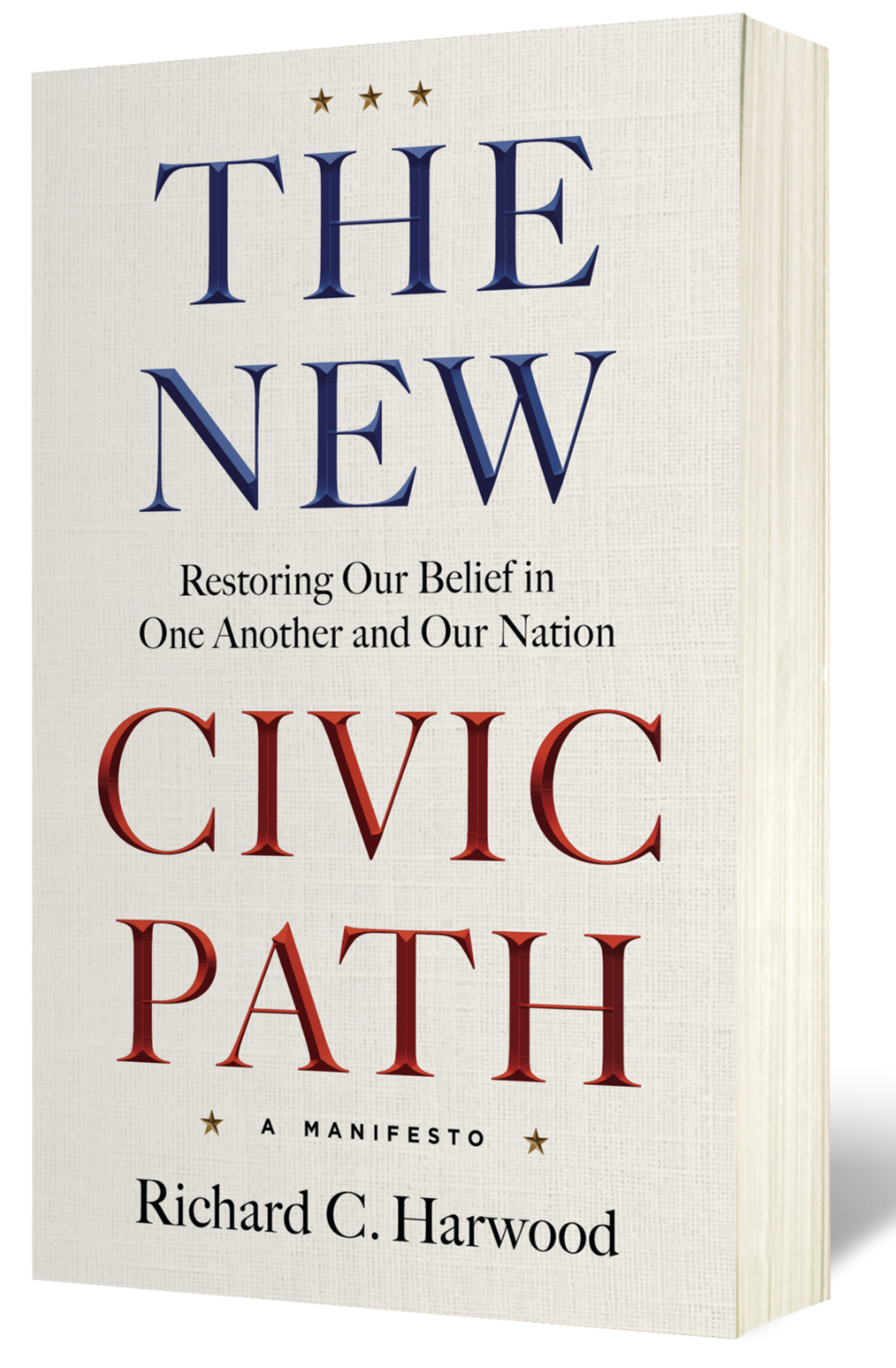
The tenuous sociopolitical divisions in the United States are unprecedented and only bound to get worse. Polarization has caused deep rifts in the political and civic fabrics of American society. As advocates for equity, community care, and inclusivity feel weary and defeated, Richard C. Harwood offers a hopeful manifesto advocating for civic renewal in America in The New Civic Path: Restoring Our Belief in One Another and Our Nation. He emphasizes the need to rebuild trust, foster authentic hope, and address societal challenges through local community action. He identifies a crisis of belief in the nation, marked by division, mistrust, and a loss of hope. He argues that meaningful change must begin at the local level, where people can come together to address shared aspirations and take small, actionable steps.

From my vantage point as an activist and social justice educator, I know the importance of creating spaces that foster connection, shared responsibility, and belonging. Inclusive engagement is central to Harwood’s message, a reminder of the value of intentionally creating spaces for inclusion. He uses real-world examples – from Reading, Pennsylvania, to DeSoto, Florida— to illustrate how diverse communities can come together to address challenges and build trust.

What I most appreciated about The New Civic Path is the focus on shared aspirations, rather than divisive issues. By reframing discussions and resisting the pull of negativity, community leaders, educators, policymakers, faith leaders, and engaged citizens can bridge divides through productive conversations and action that lead to workable solutions. In Clark County, Kentucky, local pastors united to address youth needs by creating a basketball league. The effort crossed racial, economic, and denominational lines, fostering community transformation and addressing long-standing divides. In Flint, Michigan, residents came together to address longstanding economic issues and advocate for infrastructure improvements that prioritized health and well-being for all.

While "The New Civic Path" is particularly relevant for community leaders and organizers, Harwood's approach is refreshingly free from complex public engagement jargon. His writing is clear, engaging, and inspiring, drawing readers in through storytelling and real-life examples. This persuasive and conversational style has the potential to empower people from all backgrounds, inspiring them to strengthen their communities through action, one small step at a time.

Harwood provides a hopeful and practical roadmap for communities seeking to overcome inequity, bridge divides, and cultivate a healthier civic culture. The book is a promising reminder that we can reclaim our belief in the possibility of change and that this change is within our reach.

Editor's Note: This review was originally published in Reedsy Discovery.

Saturday, October 11, 2025

Is a River Alive?

Buy from Capital Books

Robert Macfarlane’s Is a River Alive? takes readers on a journey through the evolving mythic, cultural, social, economic, and political conceptions of rivers. He focuses on the modern-day struggles and triumphs of renewing the vitality of wild waters, with particular attention to Los Cedros in Ecuador’s Amazon cloud forests, the Adyar in India, and the Mutehekau Shipu in Quebec. Macfarlane explores the profound question of a river’s lifeforce and consciousness, emphasizing the undeniable vitality of watersheds beyond their benefits to human life.

With thoughtful, wide-eyed observations, Macfarlane reveals the worldviews that have led people across cultures to rediscover ancient knowledge of humanity’s interdependence with the natural world. Through stories of individuals such as Cosmo, Giuliana, and Yuvan—who, with immense courage, risked their lives and livelihoods—he shows how rivers have been safeguarded from exploitative extraction and environmental contamination.

As the climate crisis accelerates, this book delivers a vision of resilience. Decades of work by Indigenous activists, scientists, and environmentalists show that upholding the “Rights of Nature” is not only possible but already underway. Macfarlane’s humility before the sacredness of rivers transforms these accounts into narratives of survival and testaments of hope.

Is a River Alive? is a call to reimagine our relationship with the planet. At a time when despair about our ecological future feels overwhelming, Macfarlane shows us that renewal, resistance, and reverence remain within reach.

Editor's Note: This review was originally published in San Diego Book Review.

Saturday, September 27, 2025

Edible Plants of the Pacific Northwest

Buy from Capital Books

The movement toward understanding the benefits of foraging and harvesting wild foods is gaining wider acceptance. People are seeking local and sustainable alternatives to processed foods for various reasons, ranging from a desire to connect with their cultural heritage to concerns about the ecological impacts of agriculture. In Edible Plants of the Pacific Northwest, educator Natalie Hammerquist shares her knowledge about wild flora found in neighborhoods and public lands. 

The illustrated guide, with its practical layout and comprehensive information, lists 40 species in alphabetical order, including where to see them, how to harvest them, lookalikes, recipes, and notes on sustainability. The section on commonly found poisonous and toxic species offers a valuable warning: do not eat anything until you are 100% sure what it is, ensuring you are equipped and ready to start foraging.

I am heartened by Hammerquist’s approach to share her nuanced knowledge about foraging. Folks from various experience levels will benefit from her straightforward explanations and clear, crisp photographs. It was also helpful to understand her story of reclaiming knowledge of her Swedish ancestors’ foodways and her focus on harvesting wild foods, respectfully and sustainably. Her emphasis on respect in foraging is a powerful reminder to be mindful and considerate, not just of the environment, but also of the cultural heritage and traditions we are connected to. Harvest only what you can consume is a wonderful reminder to share the bounty of our forests and wild lands with others, including our more-than-human kin.

Editor's Note: This review was originally published in Seattle Book Review.

Friday, September 5, 2025

The Dharma of Healing

Buy from Capital Books

In The Dharma of Healing, Justin Michaelson integrates practical lessons from Zen, Tibetan, and secular Buddhist teachings and practices. This actionable approach equips readers with the tools to cultivate equanimity and compassion for oneself and others. Drawing from his extensive experience as an insight meditation practitioner and teacher, he extends a generous invitation toward deeper, more intentional self-inquiry.

Michaelson’s writing resonates with a comforting, deeply empathetic tone, a direct reflection of the nonjudgmental ethos central to his Buddhist training. He skillfully invites readers to lean into the sometimes-paradoxical nature of our beliefs and emotional responses, underscoring how these internal conflicts often perpetuate and intensify our experience of suffering. Instead, he encourages readers to acknowledge and embrace suffering and to be open to learning valuable lessons from difficult emotions.

Anyone familiar with meditation knows how challenging it can be to calm both the body and mind. A key message from The Dharma of Healing is the "heart-brain connection," the interplay between our emotional and cognitive processes. Michaelson also suggests using physical (somatic) practices, emphasizing a holistic approach to healing. This book is a valuable guide for anyone seeking a more compassionate and peaceful life, whether they already meditate or are just beginning their journey of self-discovery.

Editor's Note: This review was originally published in Los Angeles Book Review.

Friday, August 22, 2025

Kitchens of Hope

Published by the University of Minnesota Press


Food is one of the most enduring ways families and communities keep their stories alive, carrying traditions across generations through recipes and shared meals. For immigrants, a favorite dish from home can be more than just sustenance—it becomes a bridge between past and present, a way of holding on to culture while navigating the uncertainties of a new life in the United States.

In “Kitchens of Hope,” editors Linda S. Svitak, Christin Jaye Eaton, and Lee Svitak Dean present a rich tapestry of first-person stories and recipes from immigrants who have found a home in Minnesota. The collection is a global journey, featuring voices from Afghanistan, Cuba, Liberia, Ukraine, and beyond. Each narrative is a unique thread in the fabric of human experience, inviting readers into personal journeys of hardship, resilience, and renewal, showing how food can ground and sustain people through profound change.

With Tom Wallace’s evocative photography, "Kitchens of Hope" is not just a cookbook, but a living cultural archive. The images capture the beauty of the dishes and the depth of the traditions they represent. Many contributors share their stories of leaving countries torn by war and upheaval, while others recount their experiences of seeking education, work, and new opportunities in the United States. No matter their journey, every story ends with a recipe—a gift of memory, survival, and love.

Proceeds from the “Kitchens of Hope” project, a labor of love by the editors and contributors, will be donated to the Minnesota nonprofit Advocates for Human Rights. The global organization provides free legal assistance to asylum seekers, people in detention, unaccompanied minors, and others who need support with human rights issues.