Saturday, September 27, 2025

Edible Plants of the Pacific Northwest

Buy from Capital Books

The movement toward understanding the benefits of foraging and harvesting wild foods is gaining wider acceptance. People are seeking local and sustainable alternatives to processed foods for various reasons, ranging from a desire to connect with their cultural heritage to concerns about the ecological impacts of agriculture. In Edible Plants of the Pacific Northwest, educator Natalie Hammerquist shares her knowledge about wild flora found in neighborhoods and public lands. 

The illustrated guide, with its practical layout and comprehensive information, lists 40 species in alphabetical order, including where to see them, how to harvest them, lookalikes, recipes, and notes on sustainability. The section on commonly found poisonous and toxic species offers a valuable warning: do not eat anything until you are 100% sure what it is, ensuring you are equipped and ready to start foraging.

I am heartened by Hammerquist’s approach to share her nuanced knowledge about foraging. Folks from various experience levels will benefit from her straightforward explanations and clear, crisp photographs. It was also helpful to understand her story of reclaiming knowledge of her Swedish ancestors’ foodways and her focus on harvesting wild foods, respectfully and sustainably. Her emphasis on respect in foraging is a powerful reminder to be mindful and considerate, not just of the environment, but also of the cultural heritage and traditions we are connected to. Harvest only what you can consume is a wonderful reminder to share the bounty of our forests and wild lands with others, including our more-than-human kin.

Editor's Note: This review was originally published in Seattle Book Review.

Friday, September 5, 2025

The Dharma of Healing

Buy from Capital Books

In The Dharma of Healing, Justin Michaelson integrates practical lessons from Zen, Tibetan, and secular Buddhist teachings and practices. This actionable approach equips readers with the tools to cultivate equanimity and compassion for oneself and others. Drawing from his extensive experience as an insight meditation practitioner and teacher, he extends a generous invitation toward deeper, more intentional self-inquiry.

Michaelson’s writing resonates with a comforting, deeply empathetic tone, a direct reflection of the nonjudgmental ethos central to his Buddhist training. He skillfully invites readers to lean into the sometimes-paradoxical nature of our beliefs and emotional responses, underscoring how these internal conflicts often perpetuate and intensify our experience of suffering. Instead, he encourages readers to acknowledge and embrace suffering and to be open to learning valuable lessons from difficult emotions.

Anyone familiar with meditation knows how challenging it can be to calm both the body and mind. A key message from The Dharma of Healing is the "heart-brain connection," the interplay between our emotional and cognitive processes. Michaelson also suggests using physical (somatic) practices, emphasizing a holistic approach to healing. This book is a valuable guide for anyone seeking a more compassionate and peaceful life, whether they already meditate or are just beginning their journey of self-discovery.

Editor's Note: This review was originally published in Los Angeles Book Review.

Friday, August 22, 2025

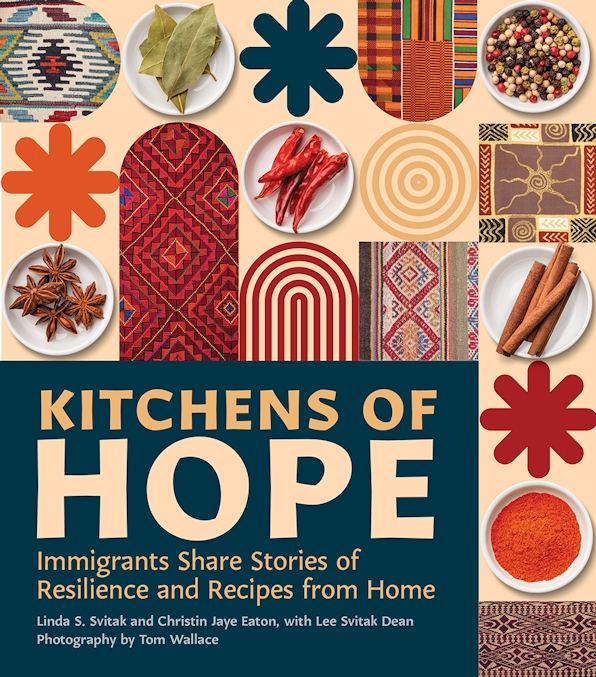
Kitchens of Hope

Published by the University of Minnesota Press


Food is one of the most enduring ways families and communities keep their stories alive, carrying traditions across generations through recipes and shared meals. For immigrants, a favorite dish from home can be more than just sustenance—it becomes a bridge between past and present, a way of holding on to culture while navigating the uncertainties of a new life in the United States.

In “Kitchens of Hope,” editors Linda S. Svitak, Christin Jaye Eaton, and Lee Svitak Dean present a rich tapestry of first-person stories and recipes from immigrants who have found a home in Minnesota. The collection is a global journey, featuring voices from Afghanistan, Cuba, Liberia, Ukraine, and beyond. Each narrative is a unique thread in the fabric of human experience, inviting readers into personal journeys of hardship, resilience, and renewal, showing how food can ground and sustain people through profound change.

With Tom Wallace’s evocative photography, "Kitchens of Hope" is not just a cookbook, but a living cultural archive. The images capture the beauty of the dishes and the depth of the traditions they represent. Many contributors share their stories of leaving countries torn by war and upheaval, while others recount their experiences of seeking education, work, and new opportunities in the United States. No matter their journey, every story ends with a recipe—a gift of memory, survival, and love.

Proceeds from the “Kitchens of Hope” project, a labor of love by the editors and contributors, will be donated to the Minnesota nonprofit Advocates for Human Rights. The global organization provides free legal assistance to asylum seekers, people in detention, unaccompanied minors, and others who need support with human rights issues.

Friday, August 15, 2025

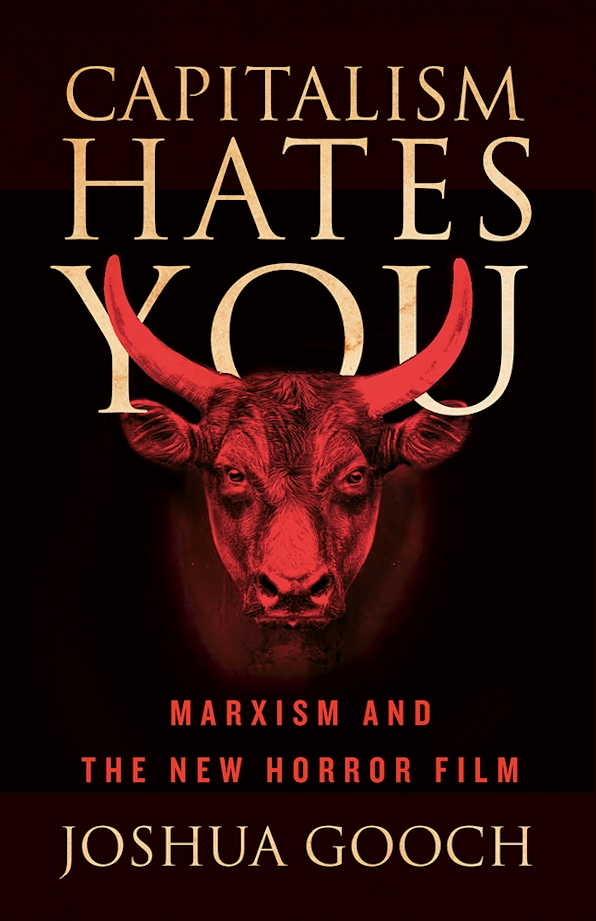
Capitalism Hates You

Published by the University of Minnesota Press

Horror generates a strange cultural fascination with the impure, the toxic, and the monstrous. Joshua Gooch’s “Capitalism Hates You” is an invigorating and deeply unsettling read, especially for someone like me—a casual fan of horror—approaching the book through both personal enjoyment and the lens of political economy and racial capitalism. Gooch’s essays offer a sharp critique of work under capitalism, showing how toiling under capitalism consumes and depletes our lives and essence of being.. In this framework, the ultimate object of capitalism is accumulation of profit, power, and human energies stretched to the breaking – often catastrophic – point.

The book presents a global array of horror titles, illuminating the shared, terrifying experiences of neoliberalism. As people’s worth around the world is reduced to what they can produce, capitalism reveals itself as insatiable; always hungry for individual and collective mental, physical, emotional, and psychic labor. Gooch captures this perfectly when he observes that capitalism “lives parasitically on what is outside its control,” inevitably seeking to consume or destroy whatever resists its reach.

Among the most compelling dimensions of Gooch’s analysis are his attention to marginalized identities. Horror often stages these tensions in unsettling ways, exposing how gendered work (caregiving in Saint Maud) and familial structures (in “Hereditary” and “The Witch”) are both weaponized and threatened under capitalism. Capitalism relies on the subjugation and appropriation of women’s labor and search for fulfillment in a career. The family, Gooch suggests, becomes a crucial site of horror: capitalism hates the protective and nuturiing function of the family because it opposes patriarchy.

Capitalism not only exploits labor but also asserts and reproduces racial hierarchies as a means of maintaining its power. Horror films such as “Candyman” and “Get Out” dramatize this reality, underscoring the entanglement of racist violence, anti-Blackness, and economic exploitation. From a Marxist perspective, these films reveal how racism is not incidental but structural, as characters contend with racial and class divides, legitimizing dispossession and naturalizing inequality in the service of capital accumulation. Racism intersperses with climate anxieties in Gooch’s interpretation of the eco-fascist views reflected in “In the Earth.” These films expose how capitalism feeds on white supremacy and racial terror, turning Black suffering and resistance into sites of horror that reflect fundamental social contradictions.

Horror is more than just entertainment; it offers a critical lens on the anxieties and violences of late capitalism, dramatizing how this economic system thrives on consumption, extraction, domination, and fear. I appreciate how Gooch made these essays accessible and relevant to both fans of the horror film genre and critics of capitalism. People with a background in economic theory would appreciate the review of Marxist thought and contemporary scholars advancing the field. For many readers, the essays may require a close read, as they are written for an academic audience.  

“Capitalism Hates You” is cultural criticism and political analysis at their sharpest. The book left me with a deeper appreciation of horror as a tool for recognizing—and resisting—the oppressive structures that shape our lives.

Sunday, July 27, 2025

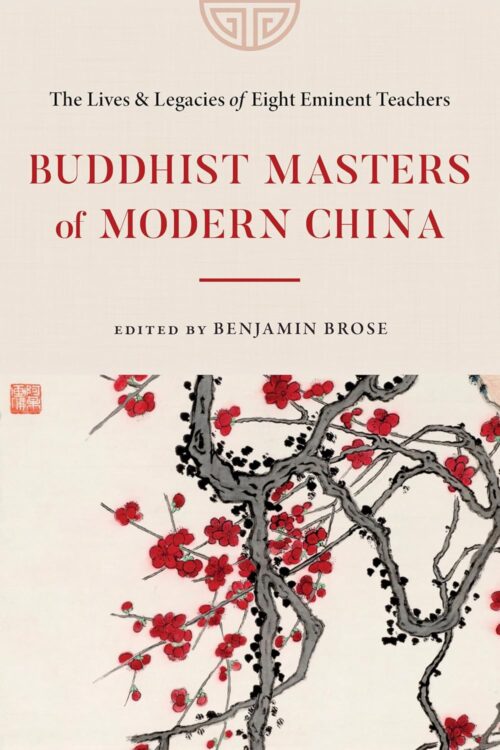
Buddhist Masters of Modern China

In the West, relatively little is known about how contemporary Chinese Buddhists live and practice their faith. As the global relevance of the Dharma grows—and as China’s economic and political influence continues to expand—interest has deepened in understanding how Buddhist traditions have endured and evolved in the country that once nurtured so many of them. In Buddhist Masters of Modern China, editor Benjamin Brose introduces readers to influential figures and their core teachings, presenting a rich tapestry of spiritual life in China.

Through eight biographical essays—each authored by a leading scholar of East Asian spirituality—the volume examines prominent figures from Buddhist traditions, including Chan, Huayan, and Pure Land. The inclusion of translated primary texts following each profile strengthens the book’s utility as both a scholarly and pedagogical resource.

The featured teachers lived and taught between the fall of the Qing dynasty in 1911 and the founding of the People’s Republic in 1949, a turbulent period of war, social change, and cultural transformation. The essays illuminate not only the teachers’ spiritual insights but also the historical challenges they faced. As a student of Buddhism, I especially valued the life stories of Xuyun, Laiguo, Benkong, and others whose teachings still resonate today. This volume illuminates how modern Chinese Buddhist leaders shaped contemporary practice and will be of value to both historians of religion and engaged Buddhist practitioners.

Editor's Note: This review was originally published in Chicago Book Review.