Saturday, July 5, 2025

Read the Bible Like a Mystic


Read the Bible Like a Mystic is Carl McColman’s invitation to readers to consider a meditative, contemplative approach to reading and interpreting scripture. The fundamentalist view that the Bible contains the authoritative word of God, and therefore must be read “simplistically and literally,” has often led to alienation and prejudice. McColman’s approach offers hope for a more compassionate and understanding interpretation. Instead of picking certain stories and verses to support an unyielding point of view, McColman invites readers to engage scripture in a nuanced and transformative way. He presents examples of mystics such as Saint Augustine and Saint Teresa of Avila, centering on humility, wisdom, and justice in the exposition of God’s love.

With my Christian upbringing and study of Buddhist traditions, I maintain a healthy skepticism of religious fundamentalism. McColman’s critiques are offered in a direct yet compassionate way, but I doubt that Christians, who tend to have a rigid, unrepentant approach, will be swayed by his well-reasoned appeal.

Read the Bible Like a Mystic is a good read for recovering Christians repulsed by the judgment and self-righteousness of others. McColman offers a warm, inviting nudge to read the Bible again, welcoming all who seek a more compassionate interpretation. By approaching scripture through self-reflection rather than as history or a code of law, we expand our ability to forge a spiritual path rooted in compassion.

Editor's Note: This review was originally published in Seattle Book Review.
Buy from Capital Books

Friday, June 27, 2025

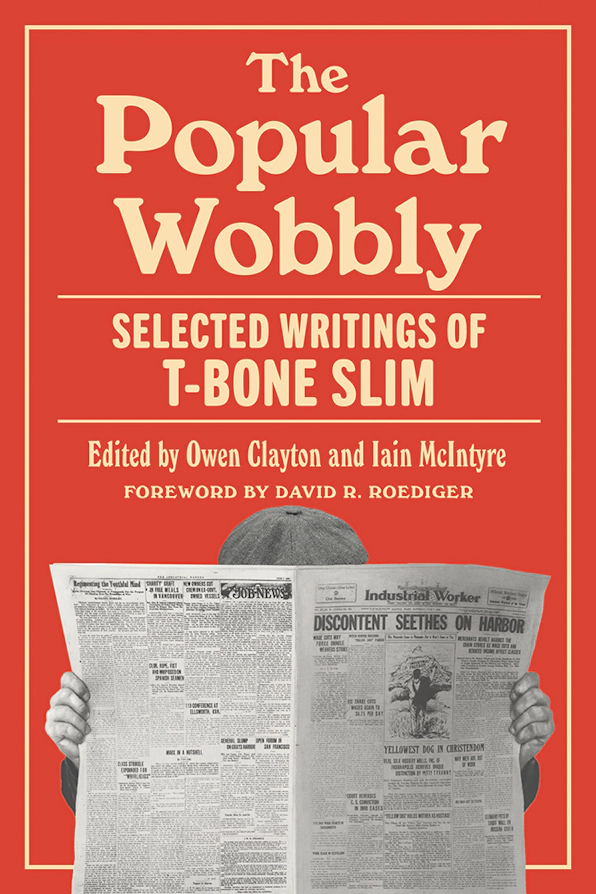
The Popular Wobbly: Selected Writings of T-Bone Slim

Published by the University of Minnesota Press

A sharp, witty, and critical voice in the labor movement of the 1920s to 1940s, T-Bone Slim—born Matti Valentinpoika Huhta—has largely faded from public memory. A columnist, humorist, musician, poet, hobo, and outspoken member of the Industrial Workers of the World (IWW), Slim was once known as “the laureate of the logging camps.” His writing, steeped in radical labor activism and working-class culture, appeared frequently in IWW publications, including the Little Red Songbook. His songs have been covered by influential artists like Pete Seeger, Utah Phillips, and Candie Carawan. Though his influence waned after his death, Slim’s voice is now being rediscovered through a compelling new collection.

The Popular Wobbly: Selected Writings of T-Bone Slim gathers Slim’s poems, songs, columns, witticisms, and more. Curated and edited by historians Owen Clayton and Lain McIntyre, the book includes a brief biography, photographs, and Slim’s original illustrations. As the editors trace Slim’s life, travels, and occupations, they illuminate the worldview of a man who published over a thousand pieces during his lifetime. Their careful selection highlights the writings most resonant and relevant to contemporary readers.

The volume is an especially timely read, a poignant reminder that injustice, class divisions, and ethnic strife are longstanding and enduring issues among America's workforce. The themes highlighted in the book range from capitalism to war, from race to immigration, from food insecurity and incarceration. The precarious lives of migrant workers feature prominently in the collection. Often using humor to confront grim realities, Slim’s commentary remains strikingly relevant today. His work offers a vivid window into American labor history and the enduring fight for workers’ rights. As he wrote in a 1922 column titled “The Power of These Two Hands,” “The construction worker has made millionaires coast to coast…”

Sunday, June 15, 2025

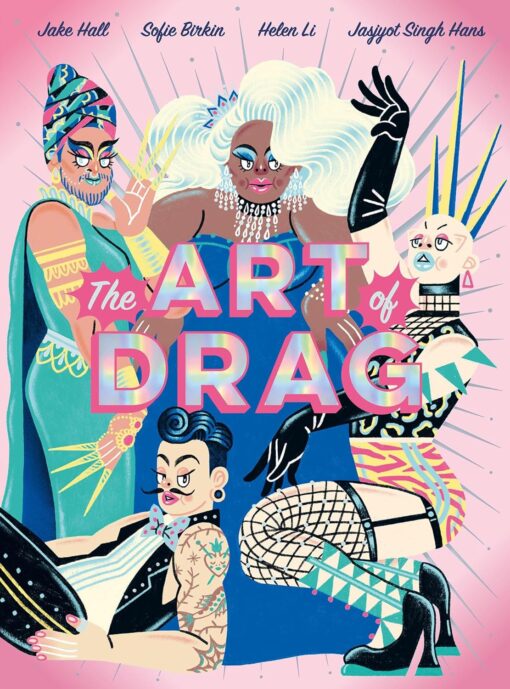
The Art of Drag

"The Art of Drag" is a delightfully informative and visually striking exploration of drag culture’s rich history and evolution. Far more than entertainment, drag is a dynamic performance art rooted in self-expression, protest, and joy. Author Jake Hall, alongside a talented team of illustrators and contributors, traces drag’s multifaceted lineage—from kabuki theater and vaudeville to pantomime and classic Hollywood cinema.

Hall highlights how drag has shifted over time, shaping and being shaped by broader cultural movements. Readers will journey from the underground ballrooms of the 1960s to iconic figures like Crystal LaBeija, Danny La Rue, and Leigh Bowery, and witness drag’s role in the fight for LGBTQ+ rights and its rise to mainstream recognition.

This beautifully rendered book is an ideal primer for those new to drag or anyone interested in understanding its cultural significance. It’s also a timely reminder of why drag matters. As anti-LGBTQ+ rhetoric strengthens in political discourse, The Art of Drag urges readers to celebrate and protect queer expression.

For many, drag is an act of self-love, resistance, and radical imagination. Whether humorous, glamorous, political, or provocative, drag is always creative. This book captures its dazzling complexity with insight and affection.

Editor's Note: This review was originally published in Seattle Book Review.

Saturday, June 7, 2025

The New Middle Way


The New Middle Way by Mel Pine is a comprehensive exploration of Buddhism tailored for modern spiritual seekers. Pine presents a balanced approach between secular and traditional Buddhism, emphasizing experiential understanding over rigid dogma. The book integrates teachings from various Buddhist traditions, including Theravada, Mahayana, and Vajrayana, while also drawing on philosophy and science. Pine shares his personal journey, marked by trauma, loss, and spiritual growth, which led him to embrace Buddhism as a path to alleviate suffering and cultivate joy.

In The New Middle Way, seasoned writer and spiritual communicator Mel Pine offers a fresh approach to Buddhism by blending traditional teachings with modern insights. ​The book is a comprehensive exploration of Buddhism tailored for modern spiritual seekers. With decades of Buddhist study and practice in Theravada, Mahayana, and Vajrayana traditions, Pine advocates for a balanced path between secular mindfulness and traditional spirituality, emphasizing experiential understanding over intellectual concepts. Pine shares his personal journey, marked by trauma, loss, and spiritual growth, which led him to embrace Buddhism as a path to alleviate suffering and cultivate joy.

Pine writes about his path in an accessible and relatable way. He vulnerably shares about how personal trauma has fostered wisdom and compassion. Trauma played a significant role in the author’s spiritual development, serving as a catalyst for his journey toward wisdom, compassion, and awakening. ​ From an early age, he witnessed suffering, including the impact of the Holocaust on his family and the violent loss of loved ones.​ These experiences confronted him with impermanence and the fragility of life, deepening his understanding of suffering. Later, tragic personal losses further shaped his perspective, teaching him resilience and the importance of equanimity.

I approached the book from my vantage point as a Zen practitioner. Along the way, I have also explored other traditions, such as Tibetan and Thai Forest practices. I believe “The New Middle Way” is an excellent read for spiritual seekers drawn to Buddhism, as it offers an accessible and informal introduction to Buddhist teachings without overwhelming readers with technical jargon or rigid dogma.

Editor's Note: This review was originally published in Reedsy Discovery.

Saturday, May 24, 2025

Gaia Wakes: Earth’s Emergent Consciousness in an Age of Environmental Devastation


The climate crisis is upon us, and environmental collapse is inevitable. The planet is on the cusp of its fifth evolutionary transition that will lead to the emergence of a planetary brain and mind. In Gaia Wakes, Topher McDougal draws a compelling link between the emergence of this consciousness and environmental exploitation. He outlines the economic, ecological, and technological mechanisms that may propel this shift. In the rise of Gaia consciousness, humans will serve as intermediaries between advanced Artificial Intelligence (AI) and the Earth’s biotic systems.

I approached the book from my interest in futurisms that involve a return to Indigenous knowledge and values.McDougal’s speculative exploration is rooted in his study of economics, ecology, evolutionary biology, and technology. Readers can follow his logic to imagine how AI can enable the development of a conscious, self-regulating biosphere.

I was also drawn to McDougal’s integration of the concept of rewilding as a forward-looking process involving technology, Indigenous knowledge, and human cultural transformation. Rewilding, in this context, refers to the restoration of natural ecosystems and the re-indigenization of human societies. When Gaia Wakes, humans—rewilded and re-Indigenized—will serve as stewards who maintain ecological balance. The book is at once dystopian and hopeful in its provocative proposal to decenter humanity’s role in the future of the planet.


Editor's Note: This review was originally published in Seattle Book Review.