Saturday, May 24, 2025

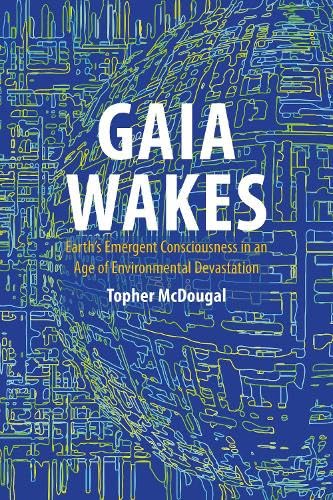
Gaia Wakes: Earth’s Emergent Consciousness in an Age of Environmental Devastation


The climate crisis is upon us, and environmental collapse is inevitable. The planet is on the cusp of its fifth evolutionary transition that will lead to the emergence of a planetary brain and mind. In Gaia Wakes, Topher McDougal draws a compelling link between the emergence of this consciousness and environmental exploitation. He outlines the economic, ecological, and technological mechanisms that may propel this shift. In the rise of Gaia consciousness, humans will serve as intermediaries between advanced Artificial Intelligence (AI) and the Earth’s biotic systems.

I approached the book from my interest in futurisms that involve a return to Indigenous knowledge and values.McDougal’s speculative exploration is rooted in his study of economics, ecology, evolutionary biology, and technology. Readers can follow his logic to imagine how AI can enable the development of a conscious, self-regulating biosphere.

I was also drawn to McDougal’s integration of the concept of rewilding as a forward-looking process involving technology, Indigenous knowledge, and human cultural transformation. Rewilding, in this context, refers to the restoration of natural ecosystems and the re-indigenization of human societies. When Gaia Wakes, humans—rewilded and re-Indigenized—will serve as stewards who maintain ecological balance. The book is at once dystopian and hopeful in its provocative proposal to decenter humanity’s role in the future of the planet.


Editor's Note: This review was originally published in Seattle Book Review.

Saturday, April 26, 2025

The Empty Path: Finding Fulfillment Through the Radical Art of Lessening


Billy Wynne’s The Empty Path is a candid and deeply introspective guide and memoir that traces the author’s personal and spiritual evolution through struggle, loss, ambition, and ultimately, awakening. With clarity and vulnerability, Wynne reflects on a childhood shaped by his parents’ divorce and his father’s dramatic fall from grace. These events sowed seeds of pain and longing in the young Wynne. In response, he poured himself into achievement, rising to success as a health policy expert and entrepreneur.

Yet, beneath the surface, unexamined habits and a growing reliance on alcohol strained his marriage and well-being. Wynne doesn’t shy away from recounting these darker moments; instead, he shares them with striking honesty, inviting readers into the discomfort and learning that followed. The turning point came with his embrace of meditation and the Zen tradition, leading him to take Buddhist vows even while confronting his addiction.

I engaged with the book from my vantage point as a Soto Zen student. The most impactful parts of the book illuminate Wynne’s testimony for what he calls “the art of lessening.” He embodies the Buddhist understanding of emptiness not as a void, but as a path to joy, presence, and peace. More than a story of personal redemption, The Empty Path is a moving meditation on letting go, living simply, and finding meaning in the stillness of each moment.

Saturday, April 12, 2025

Prairie Edge

Published by the University of Minnesota Press

Conor Kerr’s debut offering "Prairie Edge" is a bold and uncompromising novel that captures the friction between Indigenous resurgence and colonialist structures in contemporary Canada. At its heart is Grey, a fiery activist whose devotion to the buffalo—and to the larger struggle for Indigenous sovereignty—propels her into dangerous territory. Grey embodies the archetype of the strong woman warrior, a figure who refuses to accept the boundaries imposed on her by gender, politics, or settler expectations. Yet Kerr never romanticizes her: Grey may be fearless, but she is not immune to violence, loss, or the toll that activism exacts. Her story is both inspiring and deeply human.

Kerr demonstrates a remarkable ability to write complex, relatable women characters. Grey’s voice, in particular, rings with conviction and clarity, grounding the novel in lived reality. Alongside her, characters such as Ezzy bring additional layers of perspective, creating a chorus of narratives that feel distinct yet consistently connected. Through these voices, Kerr explores the sense of dislocation and disassociation that haunts many Indigenous people, a restlessness that mirrors the fate of the buffalo—once roaming freely across the Prairies, now confined, commodified, and gawked at by tourists.

The novel’s central plot—an audacious plan to free a herd of bison from a national park and release them into River City—serves as both a literal and metaphorical act of reclamation. The aftermath is messy, violent, and unresolved, much like the broader struggle for justice itself. Kerr does not shy away from the contradictions inherent in activism: the push and pull between idealism and weariness, between younger generations’ urgency and elders’ more measured approaches.

What makes Prairie Edge so compelling is its refusal to simplify. Kerr acknowledges the performative gestures of land acknowledgements, the complicity of institutions like the Mounties, and the ongoing harm of colonial systems—but he does so with nuance rather than blunt condemnation. His prose is sharp yet measured, carrying both anger and tenderness. The novel insists on the sacredness of land and the responsibility individuals have to each other, while also portraying the exhaustion that comes from living in a society that too often resists real change.

With "Prairie Edge," Kerr brings a fresh and necessary voice in contemporary Indigenous literature. It pulses with discontent, yearning, and resilience, offering readers both a mirror of struggle and a vision of possibility. Kerr’s work reminds us that survival, like the return of the buffalo, is itself a form of resistance.

Sunday, March 23, 2025

The Silent Tree: Our Family From Slavery To Reparations


The weight of generational hardships carried by enslaved peoples and their descendants is a heavy burden to bear in one’s lineage. As a white woman who descended from enslaver families, Carol Slayden Arnold devoted her time and resources to uncovering the connection between her White Slayden ancestors who were slave owners and the Black Slayden descendants, who were enslaved. The Silent Tree: Our Family From Slavery To Reparations offers a detailed historical account that traces the author's travels through various states, exploring the intertwined histories of Black and White families with the surnames "Slayden" or ”Slaton” pre-Civil War era to the mid-20th century. With contributor Cheryl Morrow Russell, Arnold shares a nuanced view of African American individuals who shared her family’s heritage. Arnold learned about his family's deep roots in Meriwether County, Georgia, where enslaved ancestors endured segregation, racial violence, and economic ​challenges, such as broken promises like "Forty Acres and a Mule," sharecropping, tenant farming, the Great Migration, and more. The narratives delve into the impact of systemic racism, the complexities of race relations, and the ongoing repercussions of slavery on individuals and communities.

Racial reparations continue to be controversial, with parties to the discourse at opposite ends of the argument. Through her family’s example, Slayden underscores how White supremacy was enforced through laws, social customs, and institutions. ​She explored how her own White ancestors benefited from systemic racism, segregation, and discriminatory practices that marginalized Black Americans. In contrast, Black family members faced limited job opportunities, racial violence, and segregation in schools. She highlights the significance of reparations in dismantling systems of oppression, as they promise to promote reconciliation and foster a more inclusive and equitable society for all individuals.

I read the book from my point of view as a diversity and inclusion practitioner and educator. In my work, I understand how discussions about the impacts of racism on Black Americans often center on current disparities in access to opportunities to build wealth. I appreciated how Arnold critically examined the role of Whiteness in perpetuating inequality, racial violence, and oppression throughout history. Through The Silent Tree, Arnold highlights the societal privileges afforded to white Slaydens as she tells a complex story of economic inequities rooted in systemic racial discrimination. The book would be relevant and informative for readers interested in exploring themes related to slavery, racial dynamics, power, and privilege. It would also appeal to those interested in genealogy, family history research, and understanding the complexities of race relations and the impact of systemic racism. Arnold models for white readers the need to reflect on the complexities of race relations, the legacy of Whiteness in shaping societal structures, and the need to dismantle systems of White supremacy for true equity and justice.

Sunday, February 23, 2025

Say Yes: Foundational Lessons from Combat Town, the Quigley, and Taking Invisible Paths


Lessons in life and leadership reveal not only character but also one’s strengths, resilience, and ability to adapt. In Say Yes, Jon Michaels shares his experiences as a Marine officer, naval aviator, and business executive, highlighting crucial lessons in leadership and personal development. Through his memoir and leadership guide, Michaels reflects on pivotal moments from his military career and how they shaped his approach to leading teams, influencing others, and taking responsibility for his actions.

The author imparts valuable insights, such as the importance of paying attention to small details and the consequences of making tough decisions. He also discusses his transition to civilian life, where he applied military principles to his work in the energy sector and at Volta, a startup focused on electric vehicle charging stations.

My curiosity about the book is anchored in understanding leadership lessons from military culture, which has often served as the basis for American corporate environments. As an institution, the American military has accomplished feats of organization and efficiency that has served as a template for business culture. Michaels mentions that he was inspired by the works of Admiral William McRaven and Captain Brett Crozier, whose writings often emphasize values rooted in their military experience, such as leadership, resilience, and integrity. In Michaels’ narrative, we learn that rigorous training and high standards of the Marines emphasized the significance of doing little things right, a lesson he carried into his work at Volta, where he implemented checklists to ensure project completion accuracy.

It was fascinating to learn about the concept of “combined arms,” a military strategy that integrates various combat units—such as infantry, armor, artillery, aviation, engineers, and other support elements—into a cohesive and synergistic force. Michaels discusses how combined arms inspired him to merge different capabilities for complementary effects, shaping his leadership style. This holistic perspective allowed him to effectively lead diverse teams and take on unexpected roles, such as serving as Volta’s Chief People Officer during a crisis.

Say Yes is a quick and engaging read for those seeking inspiration and practical advice on leadership. It is a suitable choice for a leadership retreat aimed at enhancing interpersonal skills and team effectiveness. Individuals with military backgrounds may find the book particularly appealing, as its approach aligns with their experiences. However, the author uses military jargon sparingly, making the content accessible to a broader audience. In sharing advice, Michaels draws on his past experiences and the lessons he has learned, offering readers from all backgrounds valuable insights into personal and professional growth.


Editor's Note: This review was originally published in San Francisco Book Review.