 |
| Buy from Capital Books |
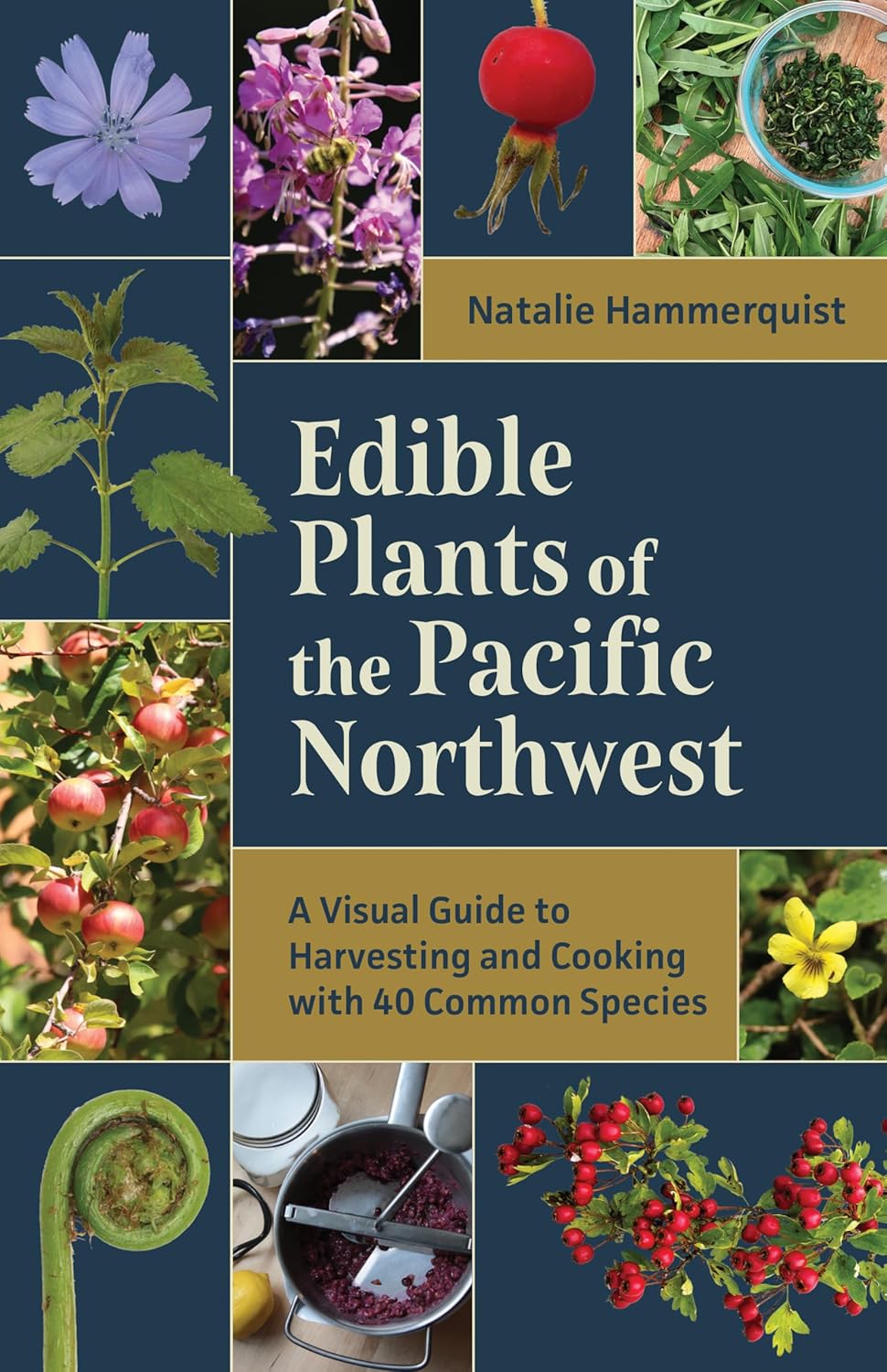
The movement toward understanding the benefits of foraging and harvesting wild foods is gaining wider acceptance. People are seeking local and sustainable alternatives to processed foods for various reasons, ranging from a desire to connect with their cultural heritage to concerns about the ecological impacts of agriculture. In Edible Plants of the Pacific Northwest, educator Natalie Hammerquist shares her knowledge about wild flora found in neighborhoods and public lands.
The illustrated guide, with its practical layout and comprehensive information, lists 40 species in alphabetical order, including where to see them, how to harvest them, lookalikes, recipes, and notes on sustainability. The section on commonly found poisonous and toxic species offers a valuable warning: do not eat anything until you are 100% sure what it is, ensuring you are equipped and ready to start foraging.
I am heartened by Hammerquist’s approach to share her nuanced knowledge about foraging. Folks from various experience levels will benefit from her straightforward explanations and clear, crisp photographs. It was also helpful to understand her story of reclaiming knowledge of her Swedish ancestors’ foodways and her focus on harvesting wild foods, respectfully and sustainably. Her emphasis on respect in foraging is a powerful reminder to be mindful and considerate, not just of the environment, but also of the cultural heritage and traditions we are connected to. Harvest only what you can consume is a wonderful reminder to share the bounty of our forests and wild lands with others, including our more-than-human kin.
Editor's Note: This review was originally published in Seattle Book Review.
I am heartened by Hammerquist’s approach to share her nuanced knowledge about foraging. Folks from various experience levels will benefit from her straightforward explanations and clear, crisp photographs. It was also helpful to understand her story of reclaiming knowledge of her Swedish ancestors’ foodways and her focus on harvesting wild foods, respectfully and sustainably. Her emphasis on respect in foraging is a powerful reminder to be mindful and considerate, not just of the environment, but also of the cultural heritage and traditions we are connected to. Harvest only what you can consume is a wonderful reminder to share the bounty of our forests and wild lands with others, including our more-than-human kin.
Editor's Note: This review was originally published in Seattle Book Review.

